Why AI is Becoming Essential for ERP Software: A Practical Guide
If you’ve worked with ERP systems, you know they’re the central nervous system of most businesses—handling everything from accounting to inventory to HR. But here’s the thing: traditional ERP systems are getting a major upgrade, and AI is the reason why.
From Record-Keeper to Strategic Partner
Think about traditional ERP systems for a moment. They’ve been great at storing information and helping us track what’s happening across the business. But they’ve mostly been passive—waiting for us to log in, run reports, and figure things out ourselves.
AI is changing that completely. Instead of just recording what happened yesterday, modern ERP systems can now predict what’s likely to happen tomorrow and even suggest what we should do about it. It’s like having a really smart analyst working 24/7 alongside you.
Where AI Makes a Real Difference
Smarter Forecasting
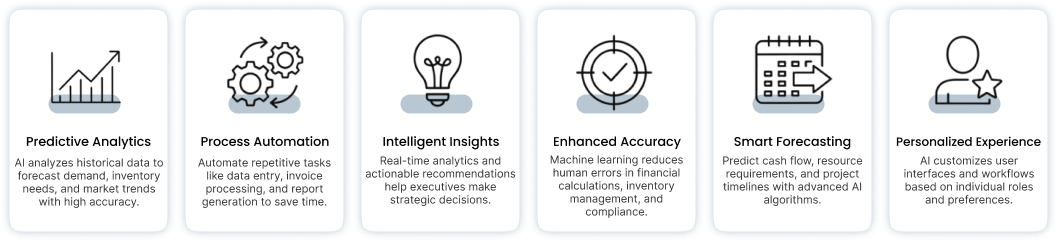
Here’s a common scenario: you’re trying to predict next quarter’s sales or figure out how much inventory you’ll need. With traditional ERP, you’d pull historical data and make educated guesses. AI takes this further by spotting patterns you might miss and getting better at predictions over time. It’s like having a forecasting expert who learns from every decision and outcome.
Automation That Actually Thinks
We’ve had automation for years, but AI brings something different to the table. Instead of just following rigid rules, AI-powered ERPs can handle messy, real-world situations. They can read invoices in different formats, understand context, spot unusual patterns, and even figure out the best vendor for a specific purchase based on dozens of factors. It’s the difference between a simple script and a thoughtful assistant.
Better Decisions, Faster
Let’s be honest—modern businesses generate overwhelming amounts of data. AI helps by surfacing the insights that actually matter. It might notice that certain customers always order more in specific weather conditions, predict that a machine is likely to break down soon based on subtle performance changes, or alert you to a potential supply chain issue before it becomes a crisis.
Making ERP Easier to Use
Ever wished you could just ask your ERP system a question instead of clicking through multiple screens? AI makes that possible. You can literally type or say “What were our best-selling products last month?” and get an answer. The system also learns how you work and starts showing you the information you need before you even ask for it.
Sharper Financial Management
In finance departments, AI acts like a vigilant watchdog. It can spot transactions that don’t look right, catch potential errors before they become problems, and help manage cash flow more precisely. For tasks like revenue recognition that involve complex rules, AI can handle the heavy lifting while ensuring compliance.
Supply Chain Intelligence
Supply chains are complicated—lots of moving parts, constant changes, and countless variables. AI excels here because it can process all that complexity simultaneously. It figures out optimal inventory levels, suggests the best shipping routes, and helps balance costs against service levels in ways that would take humans days or weeks to calculate.
What This Means in Real Terms
Companies using AI-enhanced ERP systems are seeing tangible results. Forecasts become more accurate (often 20-30% better), processes that used to take days now take hours, and costs drop significantly. But perhaps the biggest win is this: people spend less time on tedious data entry and more time on work that actually requires human judgment and creativity.
Things to Keep in Mind
Of course, it’s not magic. AI needs good data to work with—garbage in, garbage out still applies. Your team will need training, not just on the technical aspects but on how to trust and work alongside these intelligent systems. And like any powerful tool, you’ll want to use it thoughtfully and ethically.
Why This Matters Now
Here’s the reality: your competitors are probably already exploring or implementing AI in their ERP systems. The companies that embrace this technology are becoming faster, more efficient, and better at spotting opportunities. Waiting too long means playing catch-up later, which is always harder than being proactive now.
What’s Coming Next
The AI capabilities we’re seeing today are just the beginning. We’re heading toward ERP systems that can run large parts of your business operations autonomously, constantly learning and improving. These systems will get better at handling uncertainty and helping you play out different scenarios before making major decisions.
The Bottom Line
AI isn’t just another feature being bolted onto ERP software—it’s fundamentally changing what these systems can do for your business. Instead of just tracking what happened, they’re becoming true partners in running and growing your organization.
Whether you’re a business leader evaluating technology investments, an analyst researching market trends, or someone who works with ERP daily, this shift matters. AI-powered ERP systems are helping organizations work smarter, respond faster, and compete more effectively.
The businesses thriving in the next decade will be those that figured out how to harness AI within their core systems. The good news? This technology is becoming more accessible every day. The question isn’t whether AI belongs in your ERP system—it’s how quickly you can make it work for you.
At iBE along with AI chatbot (for quick help documents and how to use ibe ERP software). We are working on to build a comprehensive AI framework for Predictive AI as well as Agentic AI .